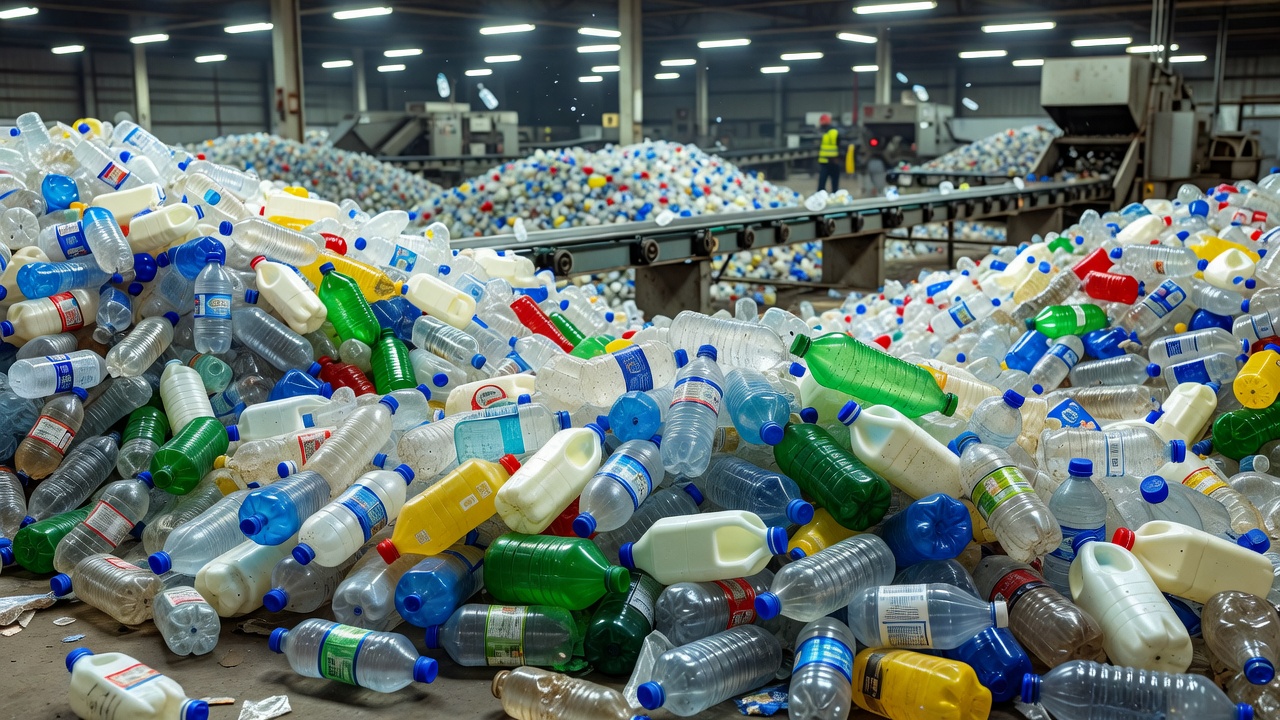
Begin with the right kind of plastic
“Recycled plastic” describes a history, not a single material. Polyethylene terephthalate, usually called PET, is common in drinks bottles and polyester textiles. High-density polyethylene, or HDPE, appears in many rigid containers. Polypropylene, or PP, serves different packaging and household uses. These polymers have different processing requirements and properties. A claim that names the polymer is more informative than one that simply invokes waste.
Origin also matters. Post-consumer material has completed its intended use with an end user. Pre-consumer material can include qualifying manufacturing waste diverted from disposal. Under the definitions used in ISO 14021, routine rework that can be reclaimed within the same process is excluded from pre-consumer recycled content. The distinction helps explain the source; it does not, by itself, rank the overall impact of two products.
Understand what processing changes
Mechanical recycling generally involves sorting, cleaning, size reduction and reprocessing. For suitable thermoplastics, this can include melting and pelletising. Contamination, mixed polymers, colour and previous heat exposure can affect the resulting material. Manufacturers may blend recovered feedstock with other inputs to achieve the required performance. That is not automatically a failure: a product that breaks early is not improved by a more impressive recycled-content headline.
Processes described as chemical recycling cover several technologies, not one uniform outcome. Some convert polymers into smaller chemical building blocks; others produce mixed outputs that need further treatment. Ask what process was used, what output became new plastic and how the recycled-content claim was calculated. A mass-balance allocation is an accounting method within a defined system, not necessarily a measurement of physically segregated recovered material in each individual object.
Match the material to the job
A recycled-PET backpack needs strong stitching, abrasion resistance and dependable closures. An outdoor bench made with recovered plastic needs stiffness, weather resistance and a suitable structural design. A food container needs compliance appropriate to food contact, not merely an appealing sustainability label. Evidence about one application cannot be carried across to another without checking its requirements.
For food-contact uses, the United States Food and Drug Administration and the European Food Safety Authority address safety questions within their respective regulatory contexts. Neither a generic resin code nor a recycled-content claim establishes that a finished item is suitable for hot food, repeated dishwasher cycles or a microwave. Follow the actual product instructions, and request clarification where its intended use is unclear.
Separate a past input from a future route
A resin identification code identifies a material category; it does not promise local collection or successful recycling. The Association of Plastic Recyclers publishes design guidance that illustrates how labels, colours, closures and other components can affect recovery. RecyClass provides another useful European reference for understanding design compatibility. These resources help explain mechanisms, but your local authority or collector still determines what belongs in your household bin.
A textile made from bottle-derived PET may contain dyes, coatings and several other fibres. It usually cannot go into a household bottle stream. Similarly, a composite outdoor board may be durable but difficult to separate into recoverable inputs. Such products can still be useful. The honest description is that their next recovery route needs its own evidence, rather than inheriting the recycling story of the starting material.
Read the claim at product scale
Look for a percentage by weight and a clear scope: whole product, body, outer fabric or packaging. If a bag’s outer fabric contains recycled polyester, that tells you nothing certain about the lining, padding or zip. Avoid mentally converting a component claim into a whole-product percentage. Ask whether the documentation identifies the product model, the calculation boundary and the recycled material’s source.
The United States Federal Trade Commission’s Green Guides offer a useful reference for distinguishing environmental marketing claims. They are not a universal certification scheme and do not replace local law. More broadly, a supplier’s explanation should be specific enough to test. “Ocean-inspired,” “eco plastic” and similar phrases do not quantify recovered material or establish where it was collected.
Make a proportionate buying decision
Start with whether you need a new item at all. If you do, compare products that perform the same task over a realistic period. Repair options, replaceable closures, spare parts and resistance to ordinary wear may matter more than a small difference in recycled content. Do not compare an unusually light disposable item with a heavier reusable one without considering repeated use and care.
At the end of use, prioritise safe continued use, repair or a genuine take-back route where appropriate. Confirm what a take-back operator accepts and what it does with collected items. “Send it back” is not enough information to establish recycling. When the only available route is residual waste, say so plainly rather than treating the recycling symbol as a guarantee.